Win Audio Driver:
The Bridge to Sound.
An audio driver is the essential software layer that manages the flow of data between your operating system and your audio hardware.
Common Software Behaviors
DAC Logic
Ensuring digital data reaches the converter in a bit-perfect state.
Latency Control
Managing buffers to prevent delays in real-time sound monitoring.
Sample Sync
Synchronizing digital clocks to prevent audible clicks or pops.
Spatial Logic
Calculating HRTFs to simulate 3D soundstages in headphones.
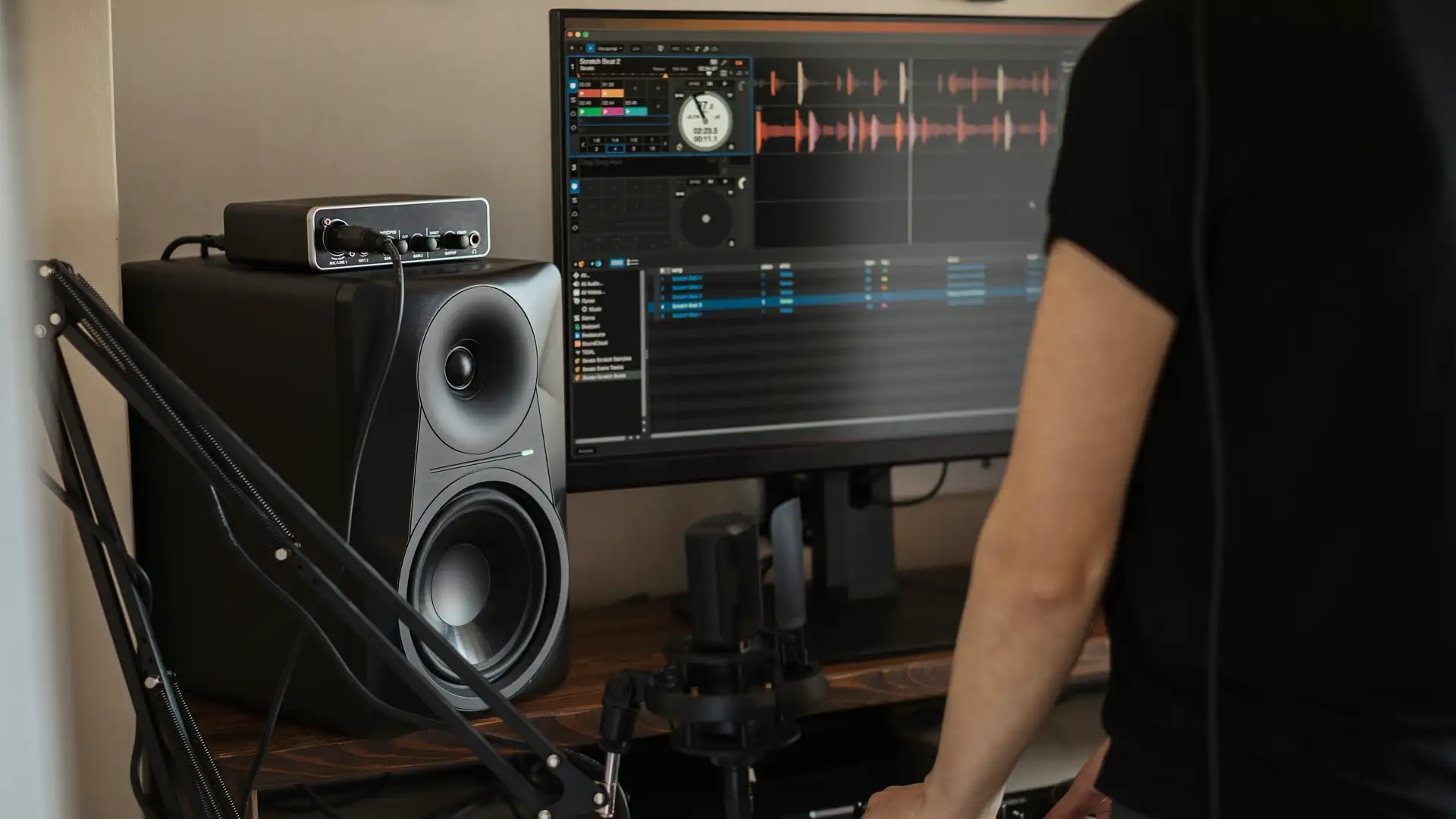
The Architecture of Sound
While often overlooked compared to graphics drivers, audio drivers perform incredibly precise tasks to ensure that sound is delivered without distortion, popping, or delay. In the world of high-fidelity audio, the driver's role in managing hardware resources is paramount. Modern audio stacks must handle multiple streams from different applications simultaneously, mixing them perfectly before sending them to the final output stage.
DACs and the Digital-to-Analog Transition
At the heart of every sound card or external audio interface is a Digital-to-Analog Converter (DAC). Computers operate in the digital domain, using 0s and 1s, but our ears—and our speakers—operate in the analog domain, using continuous waves. The DAC is the component that performs this conversion. The audio driver's job is to ensure that the digital data reaches the DAC in a "bit-perfect" state, free from jitter or timing errors that can degrade sound quality.
Sample Rates and Bit Depth
Audio quality is often defined by two metrics: Sample Rate and Bit Depth. The audio driver must manage these settings to match the capabilities of the hardware. Sample rate refers to how many times per second the analog wave is "sampled" to create digital data, while bit depth determines the dynamic range—the difference between the quietest and loudest sounds that can be accurately represented.
Advanced Communication Protocols
ASIO & WASAPI
These protocols allow the driver to talk directly to the DAC, bypassing standard system mixing to ensure the highest possible fidelity.
Buffer Management
Small chunks of data called buffers are used to prevent interruptions, though they must be balanced to minimize latency.
Spatial Audio and Driver-Level Processing
Modern audio drivers are increasingly responsible for "Spatial Audio" processing. These technologies use complex algorithms to simulate a 3D soundstage using standard headphones or speakers. The driver calculates "Head-Related Transfer Functions" (HRTFs) to trick your brain into thinking sound is coming from above or behind you.
Key Learning Points
Drivers act as a bridge between digital code and analog sound waves.
Low latency is achieved through direct hardware communication protocols.
Sample rates and bit depth determine the dynamic range of audio playback.